

I’m going to be more frank about my audio education than most graduates are willing to be, in both directions. College taught me essential things. But it also sent me into professional sessions with confident but wrong answers, and the unlearning part took longer than expected. Here’s a taste of what they don’t teach in audio school.
I’d picked up some horrible editing habits from college that no one questioned at the time. I was using time stretching to lock parts to the grid in Pro Tools. I thought it’s what you do, and hey, the tools were there for a reason, right? Wrong!
Later, I learned just how much I was damaging the audio, and that better – more effective ways of editing – existed. Ways that veteran engineers had honed over many years.
Fifteen-plus years of client work later, here’s the gap, mapped out.
What audio school actually taught well
Credit first. The basics of audio. How to use different DAWs. Exposure to rooms and consoles I couldn’t have touched otherwise. Deadlines that forced output. Experimentation. None of that was wasted.
But what it didn’t teach was how to make decisions when the textbook situation never shows up. Which is every session.
Gap 1: Your room, not their room
College teaches you to work in treated, calibrated spaces. Then you graduate into a spare bedroom, and so do your clients.
Nobody taught me that the room is the first instrument in every mix. No one taught me how to calibrate my monitoring. Nobody taught that an untreated room lies to you about low end so consistently that no amount of skill compensates, because you’re making correct decisions about wrong information. That measuring your space and treating the actual problems beats any gear purchase you will ever make.
Get it right at the source – the source is the room in this case – and everything downstream becomes easier. I learned that years later, the expensive way, by laboring over mixes far too long. I could never get a mix to sound professional when playing on any car stereo.
It was only once I had a decently treated room, that I was able to hear the limitations of my Yamaha HS-50Ms monitors, and finally justify upgrading my monitoring to 3-way Neumann K310As. Had I done this without treating first, I don’t think I would have appreciated just how magical it is to finally hear reality on a decent set of monitoring (and have that translate outside my studio).
I remember sitting back, thinking “Wow, so that’s what a tastefully distorted synth sounds like”. It was like texture and nuance were always missing and I was hearing it for the first time.
Gap 2: Your ears are not neutral
Equal loudness contours – the fact that your hearing’s frequency balance changes with playback volume – got mentioned as trivia. In practice it’s the explanation for half of all translation failures. Mix loud and everything feels rich and exciting; turn it down and the low end and air vanish, because they were never really there at conversational volume. Volume creep flatters every bad decision you make.
The professional answer is calibrated, consistent monitoring level and the discipline to keep your hand off the volume knob. If the mix lacks excitement at calibrated level, the mix lacks excitement – fix the mix, not the playback. Nobody at college framed psycho-acoustics as a daily working discipline. It’s possibly the cheapest upgrade in all of audio, and it costs nothing.
Gap 3: Decision-making under ambiguity
This is the big one, and it’s structural – college can’t easily teach it, because it doesn’t grade well.
Institutions teach rules, because rules are testable. High-pass everything. Cut don’t boost. Compress vocals this way. But real mixing is a sequence of strategy decisions made in context, and contradictions between decisions are normal. The move that saved yesterday’s mix will sink today’s, because the context changed. Two engineers can make opposite choices on the same song and both be right.
A rule-trained mixer falters the first time the rules conflict – which is every song. What you actually need is the why underneath each rule, so you know when it applies and when it’s actively wrong. That’s not a fact you memorise. It’s a way of thinking, and it was the single biggest thing I had to build for myself after graduating.
Over the years I’ve gained loads of wisdom from experienced engineers, Grammy winners, and honestly just thinking more deeply about how we do what we do in mixing. I’m often inspired but what other artistic disciplines have to say about the process of making art – whether that’s cooking, painting, poetry – there’s always something we can learn from the way people approach and think about their craft.
It’s the high-level philosophies – that ones that fundamentally turn technical knowledge on its head, and help you see things from a totally new perspective. A perspective that connects your creative and technical viewpoints together in practical way, and that truly takes something from good to great sounding.
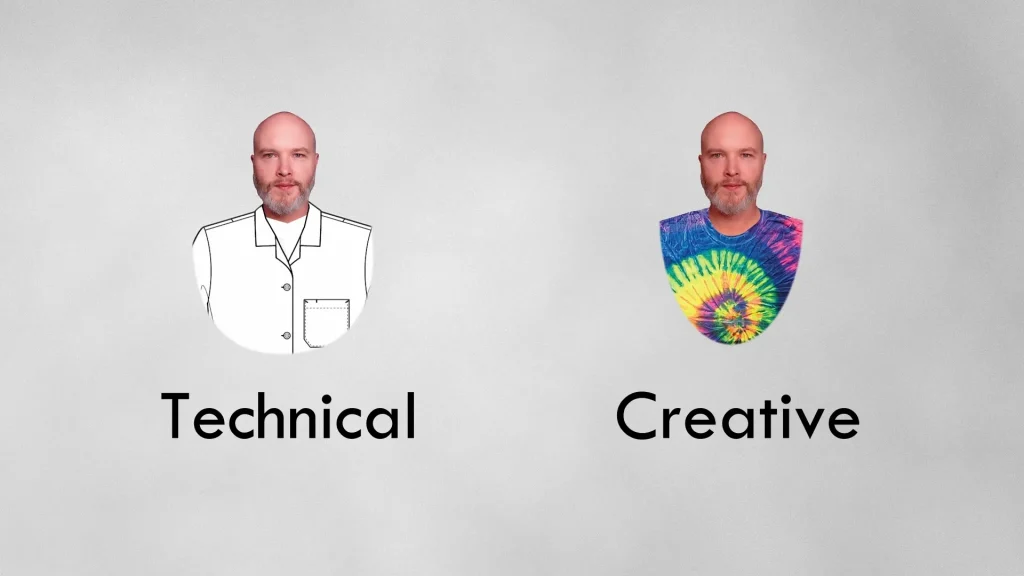
I love that sort of thing, I certainly never learned any of that in audio college, which is why I wrote it into the Level Up Pro Mixing System. It’s so important. Mixing concepts have been a tremendous help to making pro-sounding mixes. You really start to listen very differently once you learn them and it’s truly empowering.
Gap 4: Clients speak a different language
No module prepared me for the actual job: a client says “can it be warmer?” and means any of nine different things. Translating vague, emotional feedback into technical action – without ego, without blindly boosting low mids – is half of professional mixing.
Revisions aren’t attacks on your work; they’re the collaboration. College trained me to mix for an assessor with a rubric. The industry has no rubric. It has feelings, politics, deadlines, and reference tracks that clients wish their mixes sounded like (but cannot).
Why I’m telling you this
Not to dunk on my own education – I’ve been fair to it here and in the full cost-benefit breakdown. It was the unlearning was the expensive part. You can skip it.
Everything in this list – the room, psycho-acoustics, decision-making, the client layer – is the spine of the Level Up Pro Mixing System. It’s the curriculum I needed in 2011, built from what the sessions taught me instead.
If you’re weighing whether audio school is worth the investment, is audio engineering school worth it runs the honest math. The degree vs self-taught comparison covers what each path actually delivers.
Mix Artistry – learn to mix commercial-quality music by understanding the why, not the formula. Free tools + the Level Up Pro Mixing System at https://www.mixartistry.com. Get it right at the source.
